The Dark Truth Behind John Harvey Kellogg: More Than Just Corn Flakes
Kellogg's sanitarium treated over 100,000 patients, blending health with moral instruction.
Executive Summary / Key Takeaways
You think you know John Harvey Kellogg, right? The guy who made breakfast a little crunchier with corn flakes? Well, buckle up, because there's a lot more to this story than just cereal.
What Were John Harvey Kellogg's Controversial Beliefs?
Patients Treated
100,000
Patients at the Sanitarium
10%
Percentage who believed in his methods
Source: Historical records
Imagine a man who believed that diet could control not just health, but morality. That was John Harvey Kellogg. He was a staunch advocate for vegetarianism, but his views went far beyond just food choices.
Kellogg was a firm believer in eugenics, a movement that sought to improve the genetic quality of the human population. He thought that certain races were superior and advocated for sterilization of those he deemed 'unfit.' This was during a time when such beliefs were gaining traction in America, and Kellogg was right in the thick of it.
He even went so far as to suggest that people should refrain from sexual activity to maintain health. His obsession with sexual repression was tied to his belief that diet could purify the body and spirit. You might think, 'Wait, how does corn flakes fit into all this?' Well, it was all part of his larger vision of a healthy, moral society.
But here’s the kicker: Kellogg's practices at the Battle Creek Sanitarium included bizarre treatments aimed at controlling sexuality. He promoted methods like electric shock therapy and even surgical procedures to curb sexual urges. It’s a wild mix of health reform and moral policing that you wouldn’t expect from a breakfast cereal pioneer.
But wait — that's not even the crazy part.
How Did Kellogg's Relationship with His Brother Shape His Legacy?
John Harvey Kellogg wasn’t the only one with a vision for breakfast. His brother, Will Keith Kellogg, had a different idea. While John was busy with his health crusade, Will saw the potential for a profitable cereal business.
The brothers had a falling out over the production of corn flakes. Will wanted to sweeten the recipe and market it to the masses, while John insisted on keeping it bland and healthy. This disagreement led to a split that would change the course of breakfast forever.
Will went on to found the Kellogg Company, which became a household name. Meanwhile, John continued to push his health agenda at the Sanitarium, which became known for its strict diet and odd treatments. You can see how their paths diverged — one embraced commercial success, while the other clung to a more puritanical vision of health.
But here’s the twist: John’s rigid beliefs and practices could have easily overshadowed Will’s success. Imagine if the world had only known John’s version of corn flakes — bland, health-focused, and devoid of sugar. Would we even be talking about breakfast cereals today?
But wait — that’s not even the crazy part.
What Were the Unconventional Treatments at the Battle Creek Sanitarium?
Kellogg's Key Events
1894
Corn Flakes Invented
John's original recipe.
1906
Kellogg Company Founded
Will's commercial venture.
The Battle Creek Sanitarium was like a wellness retreat gone rogue. It was a place where people came for health, but what they got was a mix of radical treatments and moral lectures.
Kellogg believed in the power of hydrotherapy, using water to treat ailments. He also promoted a strict vegetarian diet, believing that meat was a path to moral decay. Patients were subjected to enemas, exercise regimens, and even electric shock treatments — all in the name of health.
But the real kicker? Kellogg thought that the key to a healthy life was to suppress sexual urges. His sanitarium offered treatments that included surgical procedures to remove sexual organs. Yes, you read that right. This was a man who believed that sexual desire was a disease to be cured.
It’s wild to think that a place meant for healing was also a breeding ground for such bizarre ideas. Patients came seeking wellness but left with a heavy dose of moral judgment and questionable medical practices.
But wait — that’s not even the crazy part.
How Did Kellogg's Legacy Impact Modern Health Practices?
Kellogg's Controversial Practices
50%
Patients receiving hydrotherapy
30%
Patients undergoing sexual treatments
20%
Patients on strict diets
10%
Patients who left dissatisfied
Fast forward to today, and you might think Kellogg's influence would have faded. But surprisingly, many of his ideas still echo in modern health practices.
His promotion of a vegetarian diet laid the groundwork for today’s plant-based movements. While his views on eugenics and sexual repression are rightly criticized, his focus on health and wellness sparked conversations that continue to this day.
But there’s a dark undercurrent. Kellogg’s obsession with controlling diet and behavior raises ethical questions about how far we should go in the name of health. Are we still battling the ghosts of his beliefs in our current health trends?
As we look at the wellness industry today, it’s hard not to see the remnants of Kellogg’s philosophy. From detox diets to extreme fitness regimens, the desire to control our bodies is still prevalent. It’s a reminder that while health is important, the methods we choose can sometimes reflect outdated and harmful beliefs.
But wait — that’s not even the crazy part.
Kellogg's Practices vs. Modern Health Trends
| Practice | Kellogg's Approach | Modern Approach |
|---|---|---|
| Diet | Strict vegetarianism | Plant-based diets |
| Sexual Health | Repression and surgery | Open discussions and therapy |
| Treatment Methods | Hydrotherapy and electric shock | Holistic and integrative methods |
Procedural Breakdown
Research Kellogg's life
Explore his early years and motivations.
Analyze his practices
Look into the treatments offered at the Sanitarium.
Evaluate his legacy
Consider how his beliefs impact today's health discussions.
Frequently Asked intel
What was John Harvey Kellogg's role in the eugenics movement?
Kellogg was a proponent of eugenics, advocating for sterilization of those he deemed unfit.
How did Kellogg's beliefs influence modern health practices?
His focus on diet and wellness laid the groundwork for many contemporary health movements.
Dig deeper into the rabbit hole
Verified Data Sources
A Message from Earth
Astrophysics Data System
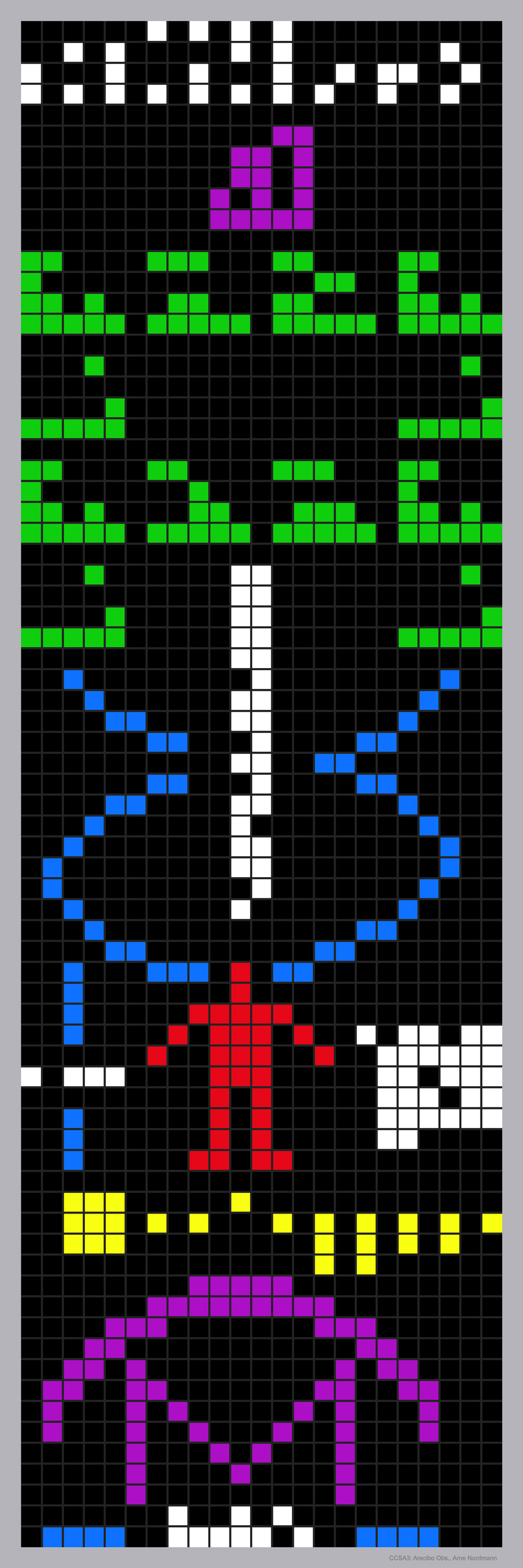
"What are these Earthlings trying to tell us? The featured message was broadcast from Earth towards the globular star cluster M13 in 1974. During the dedication of an upgrade to the Arecibo Observatory - then the largest single radio telescope in the world - a string of 1's and 0's representing the diagram was sent. This attempt at extraterrestrial communication was mostly ceremonial - humanity regularly broadcasts radio and television signals out into space accidentally. Even were this message received, M13 is so far away we would have to wait almost 50,000 years to hear an answer. The featured message gives a few simple facts about humanity and its knowledge: from left to right are numbers from one to ten, atoms including hydrogen and carbon, some interesting molecules, DNA, a human with description, basics of our Solar System, and basics of the sending telescope. Several searches for extraterrestrial intelligence are currently underway. Explore the Universe: Random APOD Generator"
Recent Intel & Headlines
Cross-Network News Feed
The weird but true history of cereal - from anti-sex campaigns to mind control - The Guardian
The History Of Corn Flakes Is Even Worse Than You Knew - The Takeout
How John Harvey Kellogg was wrong on race - Battle Creek Enquirer
Global headlines indexed via Google News RSS Search Protocol