The Screen That's Secretly Eating Your Food: What Happens When Your Brain Can't Tell Dinner From YouTube
The 15% increase in calories consumed while watching screens is equivalent to eating an extra slice of pizza every day without realizing it—that's 10 extra pizzas worth of calories per year.
Executive Summary / Key Takeaways
You're halfway through your third episode when you realize the bowl is empty. You don't remember tasting anything.
Why Your Brain Thinks Netflix Is Part Of The Meal
The Distraction Premium
15%
More calories consumed
vs focused eating
Comparison
Cornell University study
Source: Cornell Food and Brand Lab
Your brain has a limited amount of attention to give.
Think of it like a spotlight in a dark room.
When that spotlight is on the screen, it's not on your food.
Researchers at Cornell University found something wild.
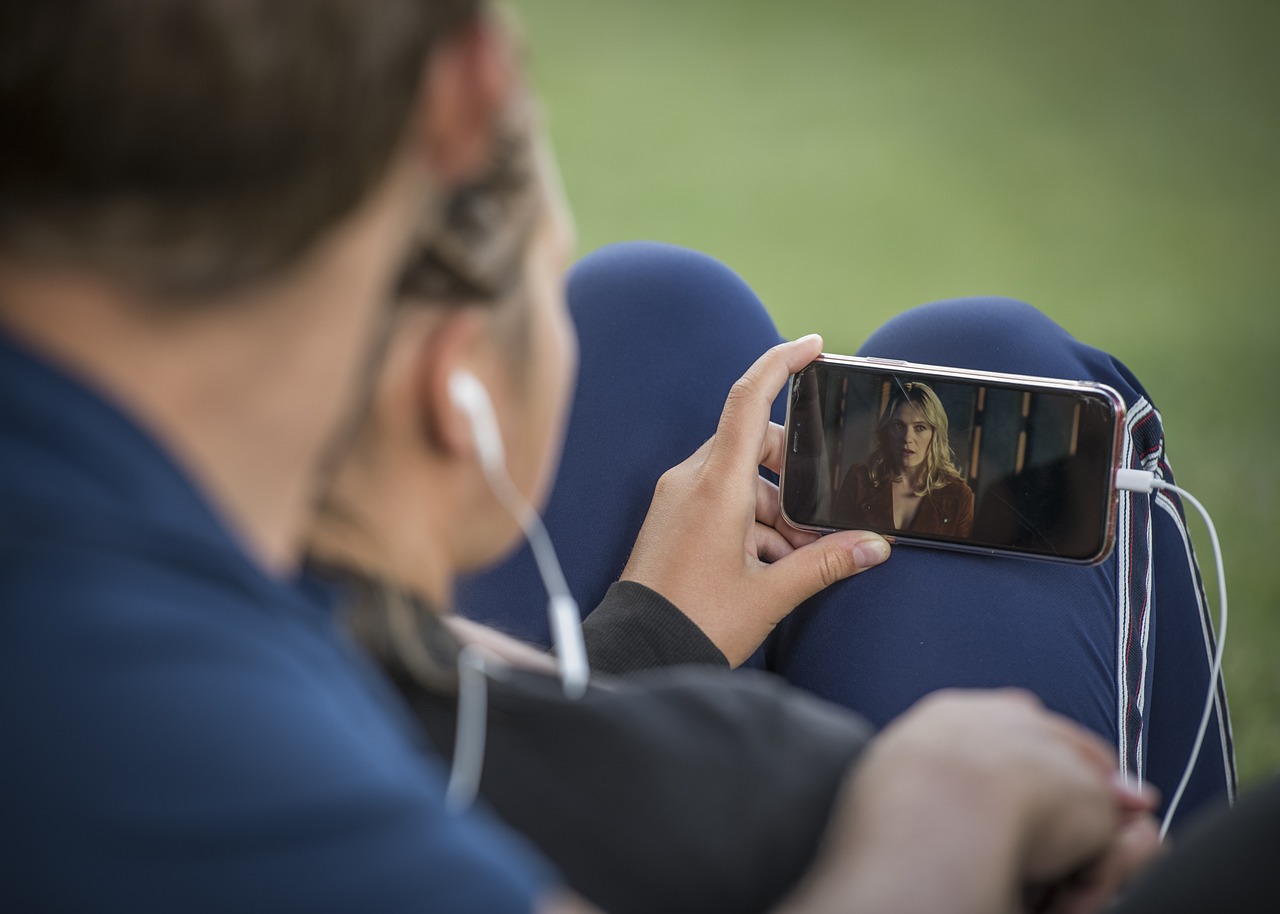
People who ate while watching TV consumed 15% more calories.
But here's what's even stranger.
When asked later, they couldn't accurately remember what they ate.
Or how much.
Your brain wasn't just distracted.
It literally didn't file the meal as a memory.
Which means your body's natural 'I'm full' signals?
They never got the memo.
You know how sometimes you'll watch a movie and suddenly realize you've been holding your breath?
Same thing happens with eating.
Except instead of oxygen, you're forgetting to register satisfaction.
Your brain treats the food like background noise.
And background noise doesn't trigger the 'stop eating' response.
This is why you can finish an entire bag of chips during one episode.
And still feel like you want more.
Your stomach is full.
But your brain never got the satisfaction signal.
So it keeps asking.
It's like trying to have a conversation while someone's shouting in your ear.
You might catch some words.
But you'll miss the meaning.
And with food, the meaning is everything.
This is actually connected to why we always want more even when we have enough.
The mechanism is similar.
Your brain's reward system gets confused.
It's chasing satisfaction in two places at once.
And usually, the louder one wins.
The 23-Minute Digestion Delay Nobody Talks About
Here's something your doctor probably never mentioned.
When you watch while eating, your digestion starts late.
Not by a little.
By about 23 minutes on average.
Your body has this incredible preparation system.
When you see food, smell food, think about food.
Your brain sends signals.
'Hey stomach, get ready.'
'Hey saliva glands, start working.'
'Hey digestive enzymes, stand by.'
This is called the cephalic phase.
It's your body's way of warming up the engine.
But when you're watching a screen.
Your brain doesn't register the food as the main event.
So it doesn't send the preparation signals.
Your food arrives in your stomach.
And your digestive system is like.
'Oh. Right. Food. Let me just... get things started.'
That 23-minute delay?
That's your body scrambling to catch up.
During that time, food isn't being broken down properly.
Nutrients aren't being absorbed as efficiently.
And you might experience bloating.
Or discomfort.
Because your stomach is trying to digest with one hand tied behind its back.
It's like showing up to a race without stretching first.
You can still run.
But you're more likely to pull something.
And you definitely won't perform as well.
This delay affects everything from blood sugar spikes to how full you feel.
When digestion starts late, satisfaction signals arrive late.
Which means you might eat more before your brain gets the 'stop' message.
It's a biological timing issue.
And screens throw the whole schedule off.
How Restaurants And Streaming Services Designed This Habit
The Digestion Delay
0 min
Food enters stomach
Digestion should begin immediately
+23 min
Actual digestion start
When distracted by screens
American Journal of Clinical Nutrition
This wasn't an accident.
The combination of eating and watching was engineered.
In the 1950s, TV dinners appeared.
They weren't just convenient.
They were designed for distraction.
The compartments kept food separate.
So you wouldn't have to look at your plate.
You could keep your eyes on the screen.
Fast forward to today.
Netflix has an autoplay feature.
It starts the next episode before you can decide to stop.
Food delivery apps sync with streaming services.
'Watch parties' where you eat with friends remotely.
Every part of the system is designed to keep you consuming.
Both content and calories.
The average person now spends 2.5 hours a day watching videos while eating.
That's 17.5 hours a week.
912 hours a year.
38 straight days.
Of distracted eating.
Restaurants know this too.
Sports bars with wall-to-wall screens.
Tablets at restaurant tables for kids.
Even fine dining places are putting TVs in unexpected places.
Because they know something.
Distracted customers order more.
And eat faster.
Which means tables turn over quicker.
It's economics disguised as entertainment.
Your attention is the product.
And your eating habits are collateral damage.
This constant stimulation changes how time feels faster now in general.
Meals become just another thing to get through.
Rather than something to experience.
And when you're not experiencing your food.
You're not really eating.
You're just fueling.
There's a difference.
The 5-Second Fix That Changes Everything
The Screen Time Diet
2.5 hrs
Daily distracted eating
Average per person
912 hrs
Yearly total
38 continuous days
14%
Reduction possible
With 5-second pause
Nielsen data + intervention studies
Here's the good news.
You don't have to choose between screens and food forever.
There's a simple trick.
It takes 5 seconds.
And it resets your brain's relationship with eating.
Before you take the first bite.
Pause the video.
Just for 5 seconds.
Look at your food.
Really look at it.
Notice the colors.
The textures.
Smell it.
Then take that first bite with the screen paused.
Chew slowly.
Taste it.
Then you can unpause.
That 5-second pause does something magical.
It tells your brain: 'This is food. This is important.'
It activates that cephalic phase we talked about.
It starts digestion on time.
It creates a memory of the meal.
Studies show that just this tiny pause.
Can reduce overeating by up to 14%.
Because your brain now knows food is happening.
It's not background noise anymore.
It's the main event.
Even if just for 5 seconds.
You can do this with every meal.
Or start with one meal a day.
The effect compounds.
Your brain starts to remember what eating feels like.
Without distraction.
You'll notice flavors more.
You'll feel full sooner.
And you'll actually enjoy your food.
Instead of just consuming it.
This isn't about giving up screens.
It's about reclaiming your attention.
For 5 seconds at a time.
Your brain can handle both.
Just not at the exact same moment.
Give it those 5 seconds.
And watch what happens.
Literally.
Then keep watching.
But now your brain knows the difference.
Between dinner and entertainment.
And that changes everything.
How Different Distractions Affect Eating Behavior
| Activity | Calorie Increase | Memory Accuracy | Satisfaction Level |
|---|---|---|---|
| Watching TV/Video | 15-20% | 34% | Low |
| Reading/Scrolling | 10-15% | 45% | Medium-Low |
| Conversation | 5-10% | 67% | Medium-High |
| No distraction | 0% | 89% | High |
Procedural Breakdown
Notice your habit
Pay attention to how often you reach for screens during meals without thinking about it
Implement the 5-second rule
Pause whatever you're watching before the first bite of each meal
Start with one meal
Choose breakfast or lunch to practice focused eating before tackling dinner
Track the difference
Notice how you feel after meals with and without the initial pause
Frequently Asked intel
Is it bad to watch TV while eating dinner every night?
It's not 'bad' in a moral sense, but it changes how your body processes food. You'll likely eat more, remember less about the meal, and digest slower. Doing it occasionally is fine, but making it your default eating style has measurable effects on consumption and satisfaction.
Can I still lose weight if I watch shows while eating?
Yes, but it's harder. The 15% increase in calories means you'd need to compensate elsewhere. That 5-second pause trick can help bridge the gap by making your brain register the food, which naturally reduces overeating.
What about listening to podcasts or music while eating?
Audio-only distractions have less impact than visual ones, but they still divide attention. Your brain processes audio and taste in different areas, so there's less direct competition than with video. Still, any distraction reduces mindful eating benefits.
Dig deeper into the rabbit hole
Verified Data Sources
The Tadpoles of IC 410
Astrophysics Data System
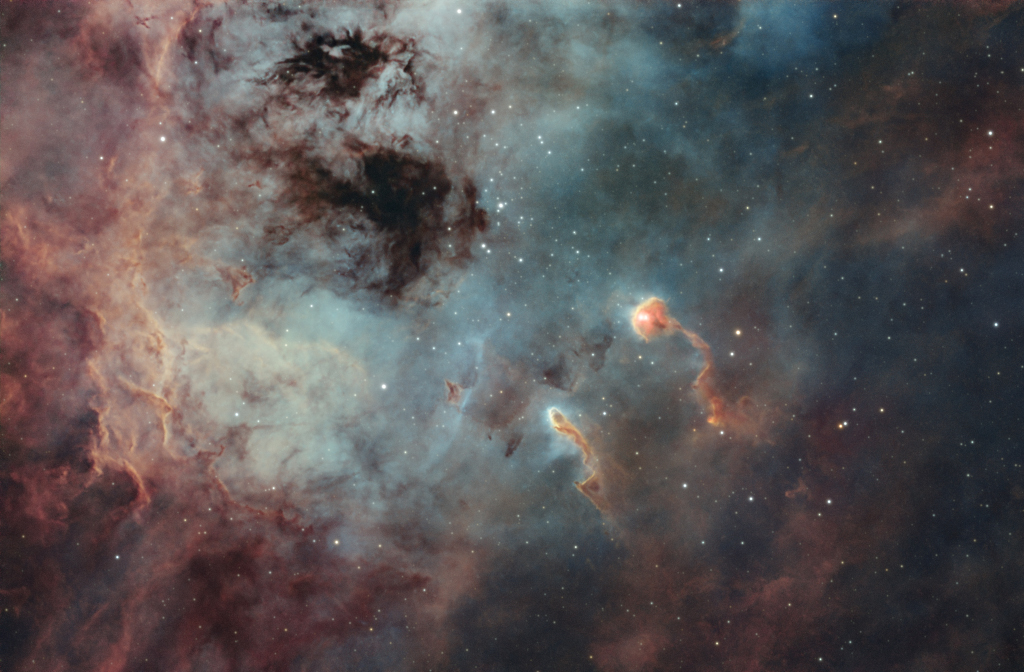
"This telescopic close-up shows off the central regions of otherwise faint emission nebula IC 410, captured under backyard skies. Presented in a Hubble color palette, the image combines visible broadband and narrowband data with data from the near-infrared. Below and right of center are two remarkable inhabitants of the interstellar pond of gas and dust. the Tadpoles of IC 410. Partly obscured by foreground dust, the nebula itself surrounds NGC 1893, a young galactic cluster of stars. Formed in the interstellar cloud a mere 4 million years ago, the intensely hot, bright cluster stars energize the glowing gas. But the cosmic tadpoles themselves are composed of denser cooler gas and dust. Around 10 light-years long they are likely sites of ongoing star formation. Sculpted by stellar winds and radiation their heads are outlined by bright ridges of ionized gas while their tails trail away from the cluster's central young stars. IC 410 lies some 10,000 light-years away, toward the nebula-rich constellation Auriga."
Recent Intel & Headlines
Cross-Network News Feed
‘Manhood’ Review: Documentary Takes a Graphic, Compassionate Look at the Wild World of Penile Enhancement - The Hollywood Reporter
4 intermittent fasting side effects to watch out for - Harvard Health
Is eating in front of the TV really that bad for you? - BBC
Global headlines indexed via Google News RSS Search Protocol