The Dolphin Who Wasn't: How a South Park Joke Became a Mirror for Human Identity
The South Park episode featuring Gerald aired in 2005—the same year YouTube launched and two years before the first iPhone. It predicted our obsession with personal transformation before social media made it universal.
Executive Summary / Key Takeaways
You're watching South Park. A character you've known for years suddenly announces he's always wanted to be a dolphin. Then he actually becomes one. This isn't a dream sequence. It's the plot.
Why would a cartoon dad want to become a dolphin?
Gerald's Cultural Timeline
2005
Episode Airs
"Mr. Garrison's Fancy New Vagina" premieres on Comedy Central
2005
YouTube Launches
Same year—beginning of user-generated content explosion
2007
First iPhone
Smartphone era begins, changing self-presentation forever
2010
Instagram Launches
Visual self-curation becomes mainstream
Sources: South Park Studios, Tech History Archives
It starts with Mr. Garrison getting a sex change operation. Everyone in town sees it. Suddenly, cosmetic surgery isn't just medical—it's fashionable. It's a trend.
Gerald Broflovski watches this happen. He's Kyle's dad, the reasonable one, the lawyer. But he's also carrying something he's never told anyone. A secret wish from when he was a kid.
He didn't just like dolphins. He wanted to be one. Not metaphorically. Literally.
So when the surgery clinic opens in town, he walks in. He points to a picture. "Make me look like that." The doctors don't blink. They've already turned someone into a tall African-American child. A dolphin? Sure. Why not.
Here's what most people miss when they watch this: Gerald isn't unhappy as a human. He's not running from anything. He just has this... idea. This image in his head of a better version of himself. And suddenly, the technology exists to make it real.
How many of us have that? Not about dolphins, maybe. But about some other version of ourselves. Thinner. Taller. More successful. Living somewhere else. Being someone else.
Gerald's dolphin dream is our fantasy of reinvention, taken to its logical extreme. What if you could just... become your ideal self? What if the only thing stopping you was that nobody offered the service?
South Park makes it ridiculous. A man in a dolphin suit flopping around town. But strip away the cartoon, and you're left with a real question about identity. When does a want become a need? When does a preference become an identity?
And this is where it gets uncomfortable. Because Gerald's transformation isn't presented as brave or authentic. It's presented as... sad. Funny, but sad. He achieves his childhood dream, and it's awful. He can't talk to his family. He can't do his job. He's stuck in a pool.
Maybe the episode is asking: what happens when we get exactly what we think we want? What if your fantasy self isn't actually... you?
What does a fictional dolphin tell us about real human psychology?
The Transformation Economy
$67B
Global Cosmetic Surgery Market (2023)
Up from $43B in 2015
4.8B
Social Media Users Worldwide
All curating digital identities
22%
Adults Considering Cosmetic Procedure
2023 survey data
2005
Year Gerald Predicted This
17 years ahead of the curve
Sources: IMARC Group, DataReportal, ASPS
Okay, stay with me. A cartoon dolphin shouldn't make you think about your own life. But it does. Because Gerald's story taps into something real.
Think about it this way: you have an idea of yourself in your head. Let's call it your "internal avatar." It's how you imagine yourself when you're daydreaming. Maybe it's more confident. More talented. Better looking.
For most of human history, that avatar stayed in your head. You could work toward it, but you'd never fully become it. There were limits. Biological limits. Social limits.
Now? Those limits are getting fuzzy. Cosmetic surgery. Social media personas. Career reinvention. You can literally craft a new version of yourself and present it to the world.
Gerald takes this to the endpoint. If you can change your nose, why not your species? If you can curate your online identity, why not your physical one?
The episode came out in 2005. Before Instagram filters. Before TikTok personas. Before "living your truth" became a marketing slogan. It predicted our current identity crisis.
We're all Gerald now. Not wanting to be dolphins, but wanting to be... something else. Something shinier. Something that gets more likes. Something that feels more authentic than our actual, boring lives.
And like Gerald, we often discover the fantasy is better than the reality. The curated version of yourself is exhausting to maintain. The new nose doesn't fix your confidence. The dream job doesn't make you happy.
This connects to something deeper about whether empathy can be taught. When you transform yourself completely, what happens to your ability to understand others? Gerald as a dolphin can't relate to his human family anymore. He's literally in a different world.
How much of our identity is about connection? About being understood? When you change yourself fundamentally, you risk losing the people who knew the old you. You become a stranger to everyone, including yourself.
That's the real horror of Gerald's story. He gets exactly what he wanted. And he's completely alone.
How did one joke episode accidentally predict 20 years of culture?
Watch the episode now. It feels less like satire and more like documentary. We live in Gerald's world.
Look at what's happened since 2005. Reality TV made extreme transformation mainstream. The Kardashians built empires on changing their appearances. Social media created entire economies based on personal branding.
Gerald wanted to be a dolphin because he thought it would make him happy. How many people now chase some ideal version of themselves for the same reason?
The plastic surgery industry has exploded. It's not just for celebrities anymore. It's normalized. Expected in some circles. You get your teeth whitened, your skin lasered, your body sculpted. Where does it end?
And it's not just physical. Digital identity is the new cosmetic surgery. You filter your photos. You curate your life for social media. You present a version of yourself that's... better. More interesting. More successful.
Gerald's dolphin transformation was surgical. Ours is often digital. But the impulse is the same: dissatisfaction with the self, and belief that a new version will fix everything.
The episode also predicted the normalization of extreme choices. In the show, nobody questions Gerald's decision. The doctors just do it. The town accepts it. It's just... what people do now.
Sound familiar? Trends that would have seemed insane twenty years ago are now everyday. Extreme diets. Digital detoxes. Van life. People radically altering their lives in search of something they can't quite name.
Gerald's story is a warning we didn't listen to. A cartoon dolphin was telling us: be careful what you wish for. The grass isn't always greener. Sometimes it's just... wetter. And you have to eat fish.
But here's the twist: the episode isn't saying transformation is bad. It's saying mindless transformation is dangerous. Gerald doesn't think it through. He doesn't consider the consequences. He just sees an opportunity and takes it.
How many of our life changes are like that? Impulsive. Driven by envy or boredom or the feeling that everyone else is doing it.
Maybe the lesson isn't "stay as you are." Maybe it's "know why you're changing." Understand what you're giving up. Consider whether the new you will still be... you.
Because Gerald the dolphin isn't Gerald Broflovski anymore. He's just... a dolphin. And he seems pretty miserable about it.
Gerald's Transformation vs Real-World Parallels
| Aspect | Gerald's Story (2005) | Modern Equivalent |
|---|---|---|
| Motivation | Childhood dream/unhappiness | Social media envy/life dissatisfaction |
| Method | Extreme cosmetic surgery | Filters, curation, personal branding |
| Social Response | Normalized/not questioned | Often encouraged/rewarded with engagement |
| Outcome | Isolation/loss of identity | Digital exhaustion/authenticity crisis |
| Presented As | Satirical warning | Lifestyle aspiration |
Procedural Breakdown
1. The Spark
Mr. Garrison's sex change operation makes cosmetic surgery fashionable in South Park, creating social pressure for transformation.
2. The Fantasy
Gerald reveals his childhood dream of becoming a dolphin—a secret wish he's carried for years.
3. The Procedure
With surgery now normalized, Gerald undergoes extreme transformation to become his idealized self.
4. The Reality
Gerald achieves his dream but loses connection to his family and human life, becoming isolated in his new identity.
5. The Warning
The episode shows that getting exactly what you think you want can leave you more lost than before.
Frequently Asked intel
Is Gerald the dolphin based on a real person?
No, Gerald is entirely fictional. He's Gerald Broflovski from South Park, who undergoes cosmetic surgery to become a dolphin in one episode. The character serves as satire, not biography.
What episode does Gerald become a dolphin?
Season 9, Episode 1: 'Mr. Garrison's Fancy New Vagina,' which first aired on March 9, 2005. The episode explores themes of identity, conformity, and cosmetic surgery trends.
Why is Gerald's story still relevant today?
Because it predicted our current obsession with personal reinvention, curated identities, and the belief that changing ourselves will solve deeper problems—themes that dominate social media and modern culture.
Dig deeper into the rabbit hole
Verified Data Sources
A Message from Earth
Astrophysics Data System
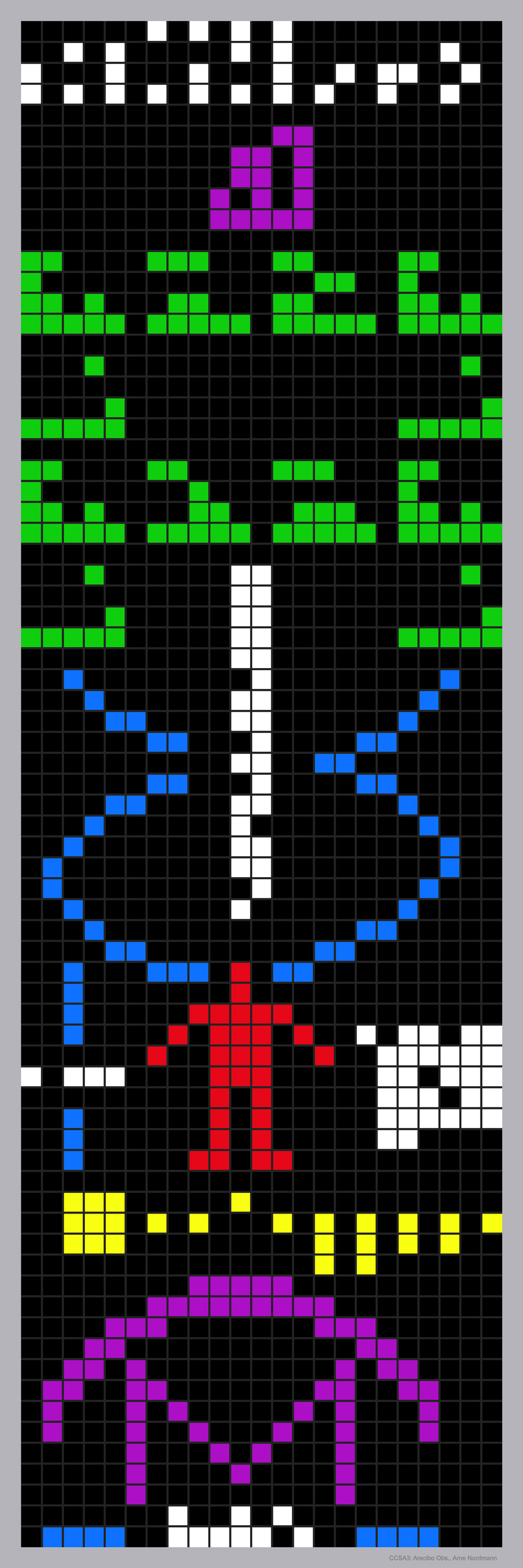
"What are these Earthlings trying to tell us? The featured message was broadcast from Earth towards the globular star cluster M13 in 1974. During the dedication of an upgrade to the Arecibo Observatory - then the largest single radio telescope in the world - a string of 1's and 0's representing the diagram was sent. This attempt at extraterrestrial communication was mostly ceremonial - humanity regularly broadcasts radio and television signals out into space accidentally. Even were this message received, M13 is so far away we would have to wait almost 50,000 years to hear an answer. The featured message gives a few simple facts about humanity and its knowledge: from left to right are numbers from one to ten, atoms including hydrogen and carbon, some interesting molecules, DNA, a human with description, basics of our Solar System, and basics of the sending telescope. Several searches for extraterrestrial intelligence are currently underway. Explore the Universe: Random APOD Generator"
Recent Intel & Headlines
Cross-Network News Feed
No, dolphins didn’t kidnap a Florida man. Fake, viral story explained - The News-Press
Was Florida man kidnapped by dolphins? We dived into rumor - Snopes
Viral 'dolphin kidnapping' arrest story is fake, Lee County deputies say - Gulf Coast News and Weather
Global headlines indexed via Google News RSS Search Protocol